Custom Magnetic Closure Boxes: The B2B Engineering and Sourcing Guide
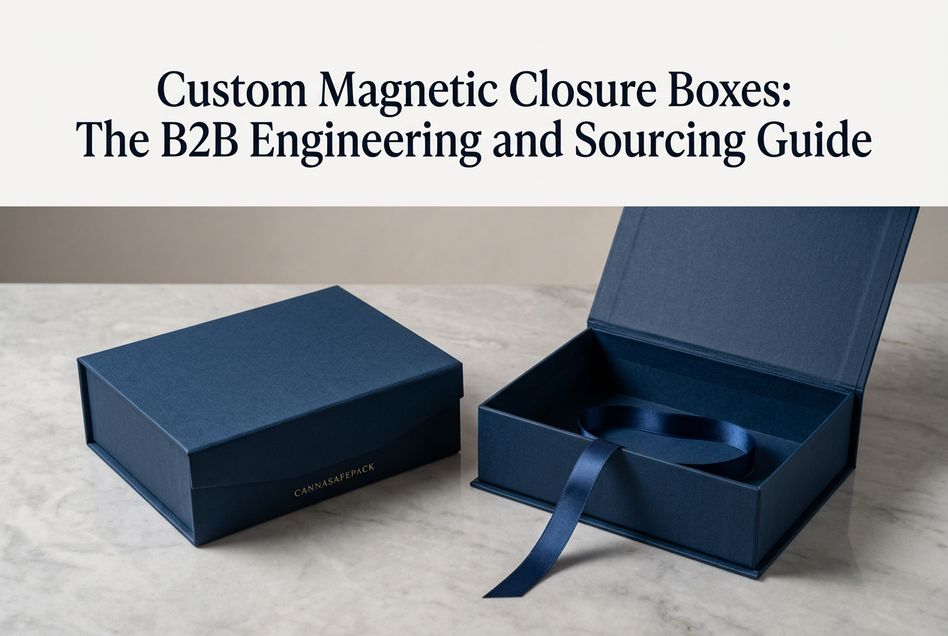
For high-end direct-to-consumer (DTC) brands, luxury cosmetics, premium electronics, and bespoke corporate gifting, packaging is the physical handshake between product engineering and consumer perception. Among luxury rigid packaging styles, custom magnetic closure boxes have emerged as the definitive global benchmark. They deliver an unmistakable sensory signature: a crisp, satisfying acoustic snap upon closure, perfectly flush seamless edges, and an enduring unboxing architecture that consumers retain on their vanity tables or bookshelves for years.
However, from a B2B procurement and supply chain perspective, specifying custom magnetic closure boxes involves complex structural trade-offs. Brands must navigate magnet polarity calibration, pull-force engineering, dense paperboard caliper tolerances, and the critical structural decision between pre-assembled rigid book-style boxes and freight-saving collapsible flat-pack boxes. This engineering and sourcing guide outlines the core technical specifications, material selections, and quality control checkpoints required to procure custom magnetic closure boxes at scale with zero assembly failures.
- 1. Structural Formats: Collapsible Flat-Pack vs. Rigid Book-Style Boxes
- 2. Magnet Engineering: Concealed Neodymium Placement, Pull Force, and Inserts
- 3. Board Caliper, Paper Wraps, and Luxury Finishing Craftsmanship
- 4. Sourcing Blueprint: Dielines, Prototyping, and Mass Quality Control
- 5. Frequently Asked Questions (B2B Sourcing FAQ)
1. Structural Formats: Collapsible Flat-Pack vs. Rigid Book-Style Boxes
The foundational engineering decision when designing custom magnetic closure boxes is selecting the structural chassis. B2B buyers generally choose between two primary architectures: pre-assembled rigid book-style boxes and collapsible (foldable) flat-pack magnetic boxes. Each structure serves distinct logistics, fulfillment, and retail environments.
- Freight Efficiency: Ships 100% flat; slashes international ocean freight volume and dimensional warehousing fees by 70% to 75%.
- Assembly Mechanism: Assembles in 5 to 10 seconds via four corner peel-and-stick high-tack 3M double-sided adhesive strips or embedded structural corner magnets.
- Best Applications: High-volume e-commerce brands, subscription boxes, DTC retail, and fulfillment centers with restricted pallet storage capacity.
- Structural Integrity: Three-panel hardboard outer wrap permanently mounted to a deep 90° rigid tray; delivers absolute structural stiffness without user assembly.
- Luxury Feel: Zero assembly lines or fold seams visible; delivers seamless monolithic luxury right out of the master shipper.
- Best Applications: High-ticket luxury jewelry, limited-edition spirits, flagship consumer electronics, and brick-and-mortar boutique presentation.

To assist procurement managers in modeling total landed costs (TLC), the table below highlights key performance and operational metrics across both structural configurations:
| Evaluation Metric | Collapsible Flat-Pack Magnetic Box | Rigid Book-Style Magnetic Box |
|---|---|---|
| Freight & Shipping Cost | Ultra-low (Flat-packed, maximum pallet density) | Higher (Ships assembled as empty volume) |
| Warehouse Footprint | Compact (Up to 4x more units per pallet) | Substantial pallet footprint required |
| Fulfillment Assembly Time | 5–10 seconds per unit (Peel & press corners) | 0 seconds (Ready for immediate packing) |
| Rigidity & Drop Resistance | Excellent (Reinforced corner joints) | Superior (Continuous solid greyboard core) |
| Tooling & Die Complexity | Complex dielines with V-grooved score lines | Standard rigid setup box dieline tooling |
| Recommended MOQ | 1,000 units (Automated folding/gluing lines) | 500 to 1,000 units |
2. Magnet Engineering: Concealed Neodymium Placement, Pull Force, and Inserts
The magnetic closure mechanism is both the physical latch and the emotional focal point of the packaging. If the closure force is too weak, the box flap pops open during handling or transit; if the magnetic pull is too aggressive, opening the box feels awkward, risking torn paper wrapping over repeated use.
Magnet Grading and Concealed CNC Pocket Milling
Industrial packaging engineers specify sintered neodymium-iron-boron (NdFeB) disc magnets rather than low-cost ferrite or flexible rubber magnetic strips. Sintered neodymium provides exceptional magnetic energy density in ultra-thin profiles (typically 12mm to 18mm in diameter with a thickness of 1.0mm to 1.5mm), graded at N35, N38, or N42 depending on box size and flap span.
To maintain a sleek, uninterrupted luxury aesthetic, magnets must remain completely invisible. Precision CNC routing or automated die-presses mill shallow blind recesses into the greyboard base and flap. The neodymium discs are seated inside these pockets and covered by a high-grade 120gsm to 157gsm interior art paper or velvet lining. Skilled production lines ensure the adhesive bonding the magnet prevents surface telegraphing (bubbling or depression marks on the exterior wrap).

Polarity Matching and Calibrated Pull-Force Acoustics
In mass manufacturing, magnet polarity alignment is a primary quality control hazard. Every automated magnet-insertion station must be equipped with magnetic polarity sensors. Reversing the polarity on a single magnet turns an attractive closure into a repulsive bounce, rendering the unit unusable.
The target pull force for custom magnetic closure boxes ranges between 800 and 1,400 grams per magnetic pair. When two pairs are installed along the front closure lip, this produces a tactile, snappy closure that rings out with an audible "click." For effortless opening, many brands incorporate an integrated grossgrain or satin pull ribbon, allowing consumers to smoothly break the magnetic seal without fingernail prying.
- High-Density EVA Foam: Custom CNC or waterjet cut to millimeter tolerances; velvet-topped EVA cushions glass bottles, dropper vials, or electronics against heavy impact.
- Thermoformed Recycled PET Trays: Engineered with tight snap-fit undercuts and luxurious electroplated or soft-flocked velvet finishes.
- Molded Sugarcane/Bamboo Pulp: 100% biodegradable, sustainable interior nestings contoured to organic product geometry with plastic-free certification.
- Multi-Tier Folding Cardboard Dividers: 350gsm to 450gsm food-grade SBS paperboard slotted partitions for lightweight, eco-friendly luxury presentation.
3. Board Caliper, Paper Wraps, and Luxury Finishing Craftsmanship
The tactile weight and structural integrity of a custom magnetic closure box depend on the synergy between the rigid substrate core and the exterior wrap paper. Understanding paperboard caliper and finishing compatibility prevents warping, cracked hinges, or delamination in humid climates.
Greyboard Core Density and V-Grooving Precision
High-grade custom magnetic boxes utilize dense, virgin-fiber industrial greyboard (chipboard) ranging from 1200gsm (1.8mm) to 1800gsm (2.8mm). For larger gift sets exceeding 30cm in width, 1500gsm to 1800gsm core board is mandatory to resist lid deflection and maintain tight dimensional stability.
To achieve razor-sharp 90-degree edges, premium manufacturers execute V-grooving (V-slot cutting) rather than traditional semi-cut scoring. By removing a precise 90° or 120° triangular channel from the board while leaving the bottom tissue intact, the greyboard folds into an architectural right angle with pristine corners that will never bow outward.

Luxury Paper Wrapping and Surface Enhancements
The rigid core is wrapped using 128gsm to 157gsm coated art paper, virgin brown/white kraft, or specialty dyed through-body uncoated papers (such as Wibalin, Colorplan, or linen-embossed buckram). Specialty finishing techniques elevate the box into a luxury artifact:
- Soft-Touch Matte Lamination: Imparts a velvety, peach-skin tactile feel while providing scuff and fingerprint resistance during handling.
- Hot Foil Stamping: Metallic gold, rose gold, holographic, or matte pigmented foil applied under heat and pressure for razor-sharp typography.
- Spot High-Gloss UV: Creates dramatic tactile contrast between matte-laminated backgrounds and glossy brand graphics or pattern motifs.
- Multi-Level Debossing / Embossing: Brass die pressing that creates multi-dimensional sculptural depth on logos and monograms without foil.
4. Sourcing Blueprint: Dielines, Prototyping, and Mass Quality Control
Sourcing custom magnetic closure boxes from international packaging manufacturers requires disciplined milestone management to avoid costly production delays or transit damage. B2B packaging buyers should structure their procurement workflow across three distinct phases.
Phase 1: Dieline Engineering and White Prototyping
Before releasing graphic artwork, request a 1:1 structural white mockup (unprinted sample). The white mockup validates board thickness, magnet positioning, closure pull force, hinge flexibility, and product cavity tolerances within the insert. Testing the unprinted sample ensures your design team can adjust artwork bleed and hinge wrap panels with microscopic precision.
Phase 2: Color Proofing and Pre-Production Wet Proofs
Always review a full-color pre-production wet proof created on the actual production press using your specified wrap stock and laminations. Digital PDFs on calibrated monitors cannot accurately reflect ink absorption on uncoated linen stocks, metallic foil reflection, or spot UV registration accuracy.

Phase 3: Standard Factory Quality Control (QC) Protocols
Ensure your manufacturing partner conducts rigorous on-line quality assurance testing prior to final palletization:
- Magnetic Snap Pull-Force Gauge Testing: Verifying magnetic force meets specified tolerance (e.g., 1000g ± 150g) across sampling batches.
- Hinge Fatigue Test: Flexing the paperboard box hinge through 300 to 500 complete 180° open-and-close cycles to guarantee zero paper tearing or crease cracking.
- Cross-Hatch Tape Adhesion Test: Confirming hot stamping foil and spot UV coatings adhere permanently to laminated wrap paper under ASTM D3359 standard tape pull tests.
- Transit Drop & Compression Testing: Conducting ISTA 1A or ISTA 2A drop tests on packed master cartons to confirm corner rigidity and internal component protection during international logistics.
5. Frequently Asked Questions (B2B Sourcing FAQ)
Our standard MOQ for custom magnetic closure boxes starts at 1,000 units for fully customized dielines, specialized foil stampings, and custom-molded inserts. For select standard sizes or pilot project launches, trial production runs starting at 500 units can be accommodated.
Collapsible magnetic boxes utilize heavy-duty, high-shear 3M double-sided adhesive strips on the four inner corner flaps, or secondary embedded corner magnets. Once the backing liner is peeled away and the side walls are pressed firmly into a 90-degree position, the adhesive cures to form a permanent, rigid structure that will not loosen or wobble under normal retail use.
The hinge area experiences the highest mechanical stress. We engineer the hinge using high-tensile 157gsm coated art paper or reinforced cloth-backed paper with long-grain fiber orientation running parallel to the score line. Additionally, a microscopic expansion gap is calculated into the board dieline to eliminate tension strain when the flap is opened flat at 180 degrees.
Structural white prototyping takes 3 to 5 business days; full pre-production sampling takes 7 to 10 days. Following final sample approval, mass production typically takes 18 to 25 business days. International ocean freight to North America or Europe generally ranges between 20 and 32 days, while expedited air freight requires 5 to 8 business days.
From bespoke collapsible flat-pack architectures to handcrafted luxury book-style gift boxes, Cannasafepack delivers full-service OEM/ODM manufacturing. We manage structural engineering, precision magnet calibration, premium surface finishing, and door-to-door global fulfillment.
Contact Us
Custom Skincare Packaging Boxes: Precision Inserts, Heavy Glass Protection, and Luxury Unboxing for Beauty Brands
Related Article