
Rigid Box vs. Folding Carton: The Complete B2B Packaging Selection Guide
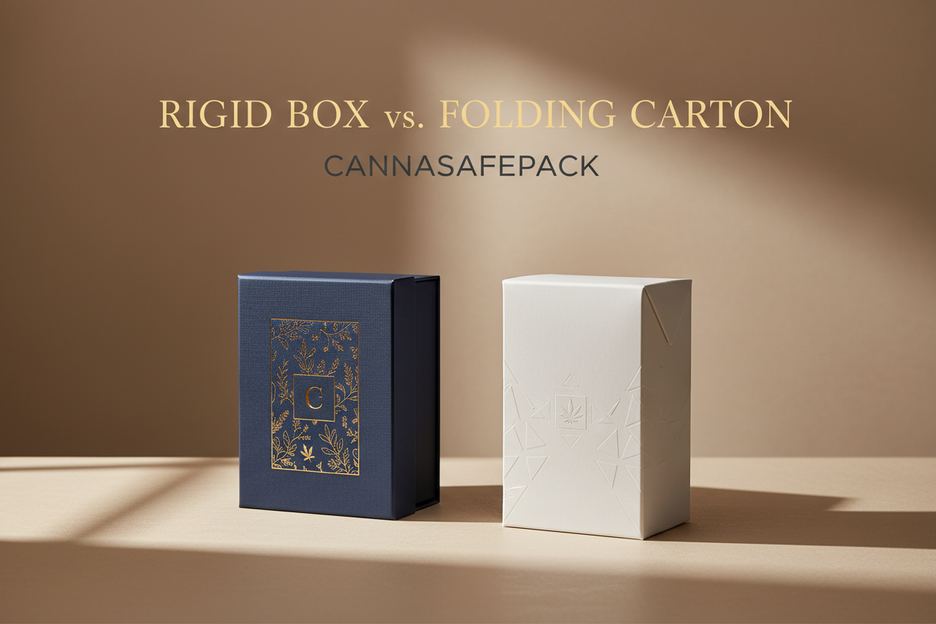
For brand founders, product developers, and procurement managers, selecting secondary packaging is one of the most critical structural decisions in the entire product launch cycle. The decision between a custom rigid box and a folding paperboard carton defines far more than packaging aesthetics. It directly governs your per-unit bill of materials (BOM), shipping container utilization, warehouse racking expenses, product safety margins, and consumer unboxing perception.
While both formats protect retail merchandise and communicate brand equity on store shelves, their manufacturing processes, structural durability, and economic scaling profiles are fundamentally different. This comprehensive B2B selection guide breaks down the core technical distinctions between rigid boxes and folding cartons, giving your sourcing team actionable data to make informed procurement decisions.
- 1. Anatomy and Materials: How Rigid Boxes and Folding Cartons Differ
- 2. Perceived Value, Tactile Weight, and the Unboxing Experience
- 3. Supply Chain Logistics: Shipping Volume and Storage Cost Realities
- 4. B2B Cost Breakdown, Tooling Fees, and Production Lead Times
- 5. B2B Selection Framework: Choosing the Right Structure for Your Product
1. Anatomy and Materials: How Rigid Boxes and Folding Cartons Differ
The foundational difference between a rigid box and a folding carton lies in material thickness, internal substrate density, and assembly construction. Sourcing teams must understand how each format is fabricated to specify accurate tolerances when requesting quotes from packaging manufacturers.

Custom Rigid Boxes (Setup Boxes): A rigid box is constructed from a heavy solid paperboard core, commonly referred to in the packaging industry as greyboard, chipboard, or condensed fiberboard. This structural core typically measures between 1.2 mm and 3.0 mm (600 to 1800 GSM). Because dense greyboard cannot be cleanly creased and folded on standard high-speed folder-gluer lines, rigid box manufacturing requires V-grooving or die-scoring, followed by automated corner taping. A separate lightweight decorative wrapping paper (128 to 157 GSM art paper, kraft paper, or textured specialty paper) is then laminated and tightly turned over the solid core.
Custom Folding Cartons: In contrast, a folding carton is manufactured from a single sheet of flexible, lightweight paperboard, typically measuring 0.3 mm to 0.8 mm in caliper (14 pt to 28 pt, approximately 250 to 450 GSM). Popular paperboard substrates include Solid Bleached Sulfate (SBS), Coated Unbleached Kraft (CUK), and Folding Boxboard (FBB). The flat sheet is printed, die-cut, creased along defined score lines, and flat-glued along the side seam. Folding cartons ship completely flat and are quickly popped open and erected at the packing line.
- Core substrate: 1.2 mm – 3.0 mm condensed greyboard
- Two-layer lamination (structural board + outer art wrap)
- Pre-assembled, rigid structure that never folds flat
- Compressive strength: Exceptional stack load resistance
- Typical styles: Lid and base, magnetic closure, slide drawer
- Core substrate: 0.3 mm – 0.8 mm (16 pt – 24 pt) paperboard
- Single-layer substrate with direct surface printing
- Ships 100% flat and erects in seconds on packaging lines
- Compressive strength: Moderate, ideal for light to midweight items
- Typical styles: Straight tuck, reverse tuck, auto-lock bottom
2. Perceived Value, Tactile Weight, and the Unboxing Experience
Packaging serves as the primary physical bridge between your brand and the end customer. In premium retail and direct-to-consumer (DTC) channels, consumer perception of product value is intimately tied to the weight, sound, and resistance of the packaging structure.

Rigid boxes project permanence and luxury. When an end customer holds a rigid box, the dense mass, seamless wrapped edges, and firm structural rigidity immediately signal that the contents inside are valuable. Premium lid-and-base rigid boxes are frequently engineered with calculated air friction (vacuum-draw), where the lid glides open smoothly over two to three seconds. Furthermore, rigid boxes are rarely discarded; consumers retain them for ongoing desktop storage or keepsake display, extending brand visibility for months.
Folding cartons, while highly versatile and capable of supporting immaculate graphics, are fundamentally viewed as single-use secondary packaging. In mass-market retail, folding cartons excel because they fit standard shelving footprints and retail peg hooks. However, because the board substrate flexes under finger pressure, consumers inherently perceive folding cartons as protective transit containers rather than heirloom luxury vessels.
3. Supply Chain Logistics: Shipping Volume and Storage Cost Realities
When conducting a total cost of ownership (TCO) analysis, packaging procurement teams must look past the initial factory purchase price (FOB) and factor in sea freight, domestic trucking, and warehouse pallet storage costs.

The Storage and Freight Efficiency of Folding Cartons: Folding cartons ship completely flat in corrugated master shippers. A single standard 40-foot high-cube shipping container can easily accommodate 150,000 to 300,000 flat-packed folding cartons, depending on box dimensions. Warehouse storage demands are minimal; a single pallet rack can store tens of thousands of flat cartons until they are fed into fulfillment lines. This density drastically lowers your landed cost per unit.
The Volumetric Impact of Rigid Boxes: Because standard rigid boxes are pre-erected at the manufacturing plant, they essentially ship "trapped air." That same 40-foot container that holds 200,000 folding cartons might only accommodate 8,000 to 18,000 assembled rigid boxes. This creates a substantial freight multiplier for international shipping lanes. For brands seeking the premium unboxing of a rigid box without astronomical shipping volume, collapsible rigid boxes with concealed magnetic corners offer an engineered compromise, shipping flat and folding into rigid structures at assembly.
| Evaluation Metric | Custom Rigid Box | Custom Folding Carton |
|---|---|---|
| Standard Board Thickness | 1.5 mm – 2.5 mm (Dense Greyboard) | 0.35 mm – 0.60 mm (16 pt – 24 pt SBS) |
| Shipping Format | Pre-assembled 3D (or Collapsible Flat) | 100% Flat-Packed |
| Container Utilization | Low (Ships assembled volume) | Extremely High (Maximum packing density) |
| Crush & Impact Resistance | Superior (Protects fragile luxury items) | Moderate (Requires master carton support) |
| Unit Cost (FOB Baseline) | $1.80 – $6.50+ (High material & labor) | $0.25 – $1.20 (High-speed automated) |
| Ideal Product Tier | Luxury cosmetics, fine spirits, jewelry | Pharmaceuticals, food, retail consumer goods |
4. B2B Cost Breakdown, Tooling Fees, and Production Lead Times
Production mechanics dictate minimum order quantities (MOQs) and cost inflection points across both packaging formats. Understanding how setup costs are distributed allows sourcing teams to place orders that maximize gross profit margins.
Folding Carton Economics: Folding carton production lines operate on ultra-high-speed offset printing presses, automated rotary die-cutters, and inline folder-gluers capable of processing 40,000 to 100,000 units per hour. Because initial plate setup and mechanical calibration take considerable time, per-unit pricing drops sharply between 3,000 units and 20,000 units. For mass production runs exceeding 50,000 units, unit costs often fall below $0.40, making folding cartons the most economical choice for retail volume.
Rigid Box Economics: Rigid boxes require multi-stage fabrication: cutting greyboard, corner grooving, paper lamination, automated or semi-manual wrap positioning, edge tucking, and precision insertion of custom foam trays. Because rigid box lines run at lower hourly outputs and demand higher material costs, the baseline unit cost remains significantly higher than a folding carton. Tooling costs typically range from $300 to $800 for custom steel die-boards and grooving setups, with production lead times generally running 18 to 25 business days.
5. B2B Selection Framework: Choosing the Right Structure for Your Product
To determine whether your product line requires the structural prestige of a rigid box or the cost-efficient scalability of a folding carton, evaluate your specifications against the following decision criteria:

A reliable industry rule of thumb is to budget between 5% and 10% of your retail MSRP for primary and secondary packaging. If your product retails between $80 and $300 (such as luxury perfumes, fine jewelry, premium spirits, or high-end electronics), a $2.50 to $4.00 rigid box represents an ideal value driver. If your product retails under $30, a $0.50 folding carton protects your unit margin.
Heavy glass bottles, ceramic vessels, precision hardware, or delicate multi-component kits require substantial puncture resistance and corner stiffness. Rigid boxes provide solid perimeter walls that will not crush or buckle during palletized transit, especially when paired with high-density custom EVA foam or molded pulp inserts.
If your brand relies heavily on traditional brick-and-mortar retail distribution, shelf space is intensely competitive. Folding cartons offer slender, standardized profiles that fit compact retail display fixtures. Conversely, if your sales channel is predominantly e-commerce DTC, the exterior box serves as the tactile unboxing moment that drives customer retention and social unboxing shares.
Ready to Get Started?
Cannasafepack provides end-to-end custom packaging solutions — from structural design and compliance testing to full-color printing and global fulfillment. Contact us today for a free sample or quote.
Contact Us
Custom Packaging Boxes: A B2B Buyer's Guide
Related Article


